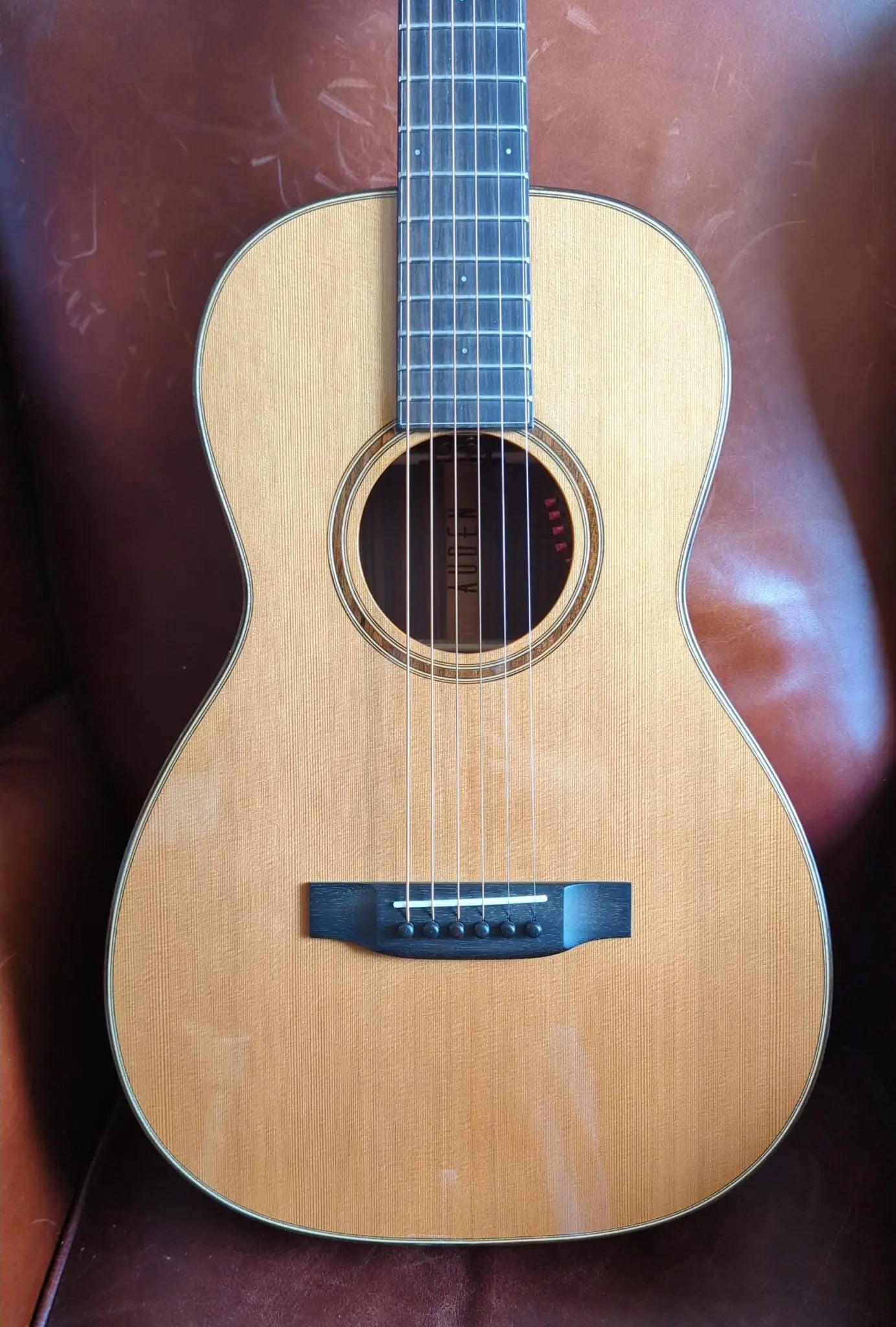
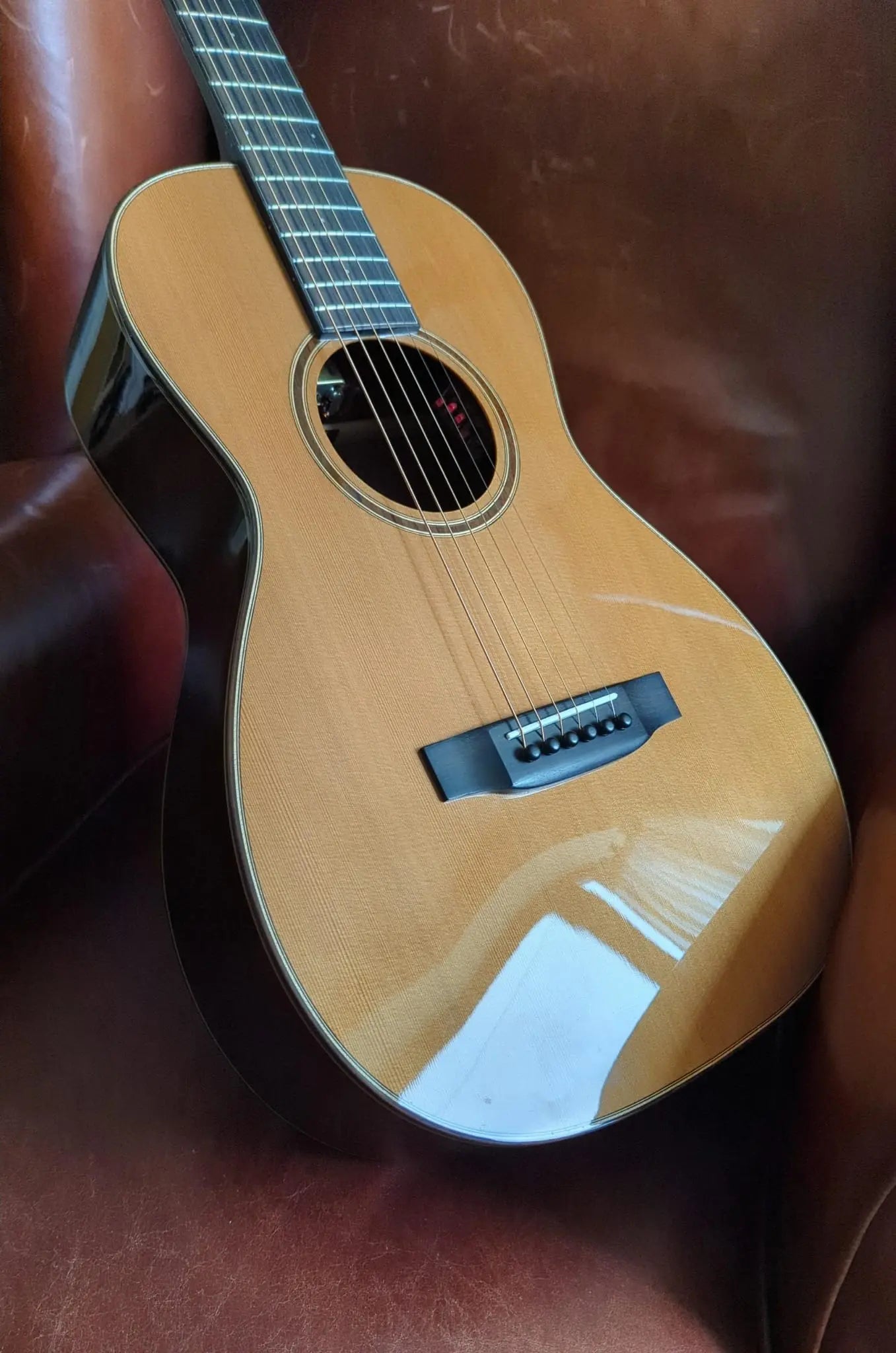
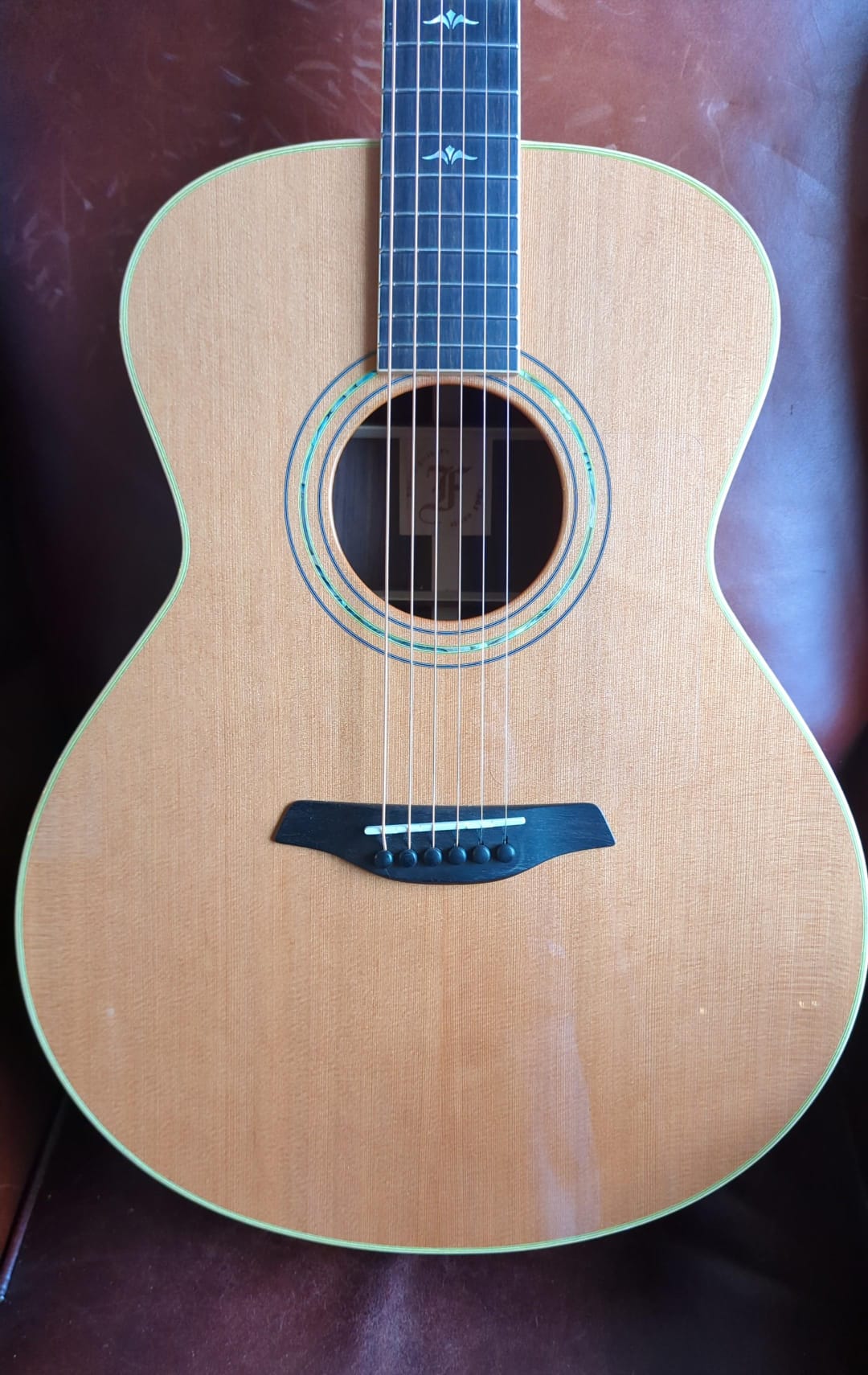
Most guitar reviews float in a vacuum, as if an instrument exists independently of the player or the job it’s meant to do. This one doesn’t. I bought the Guild Jumbo Junior Reserve Maple for a very specific purpose, and the only fair way to judge it is against that purpose.
The Job
I needed a compact, short scale acoustic with a clear, articulate voice for trad rhythm: fast attack, crisp ornaments, tidy bass, good tension, and long session comfort. A small guitar with a clean, quick, musical voice — not a warm strummer or a “sounds big for its size” novelty.
Why Not the Taylor GS Mini?
Great guitar, wrong voice.
• Low end too full and bloomy
• Warm mids that blur fast passages
• Built for comfort and warmth, not clarity
I needed a bright, disciplined, responsive instrument.
Why Not My Furch Pioneer CM a?
My Furch (24.2", cedar/khaya) is my main casual travel guitar — warm, rich, resonant, and expressive. But resonance wasn’t what I needed.
Resonance vs Reflection
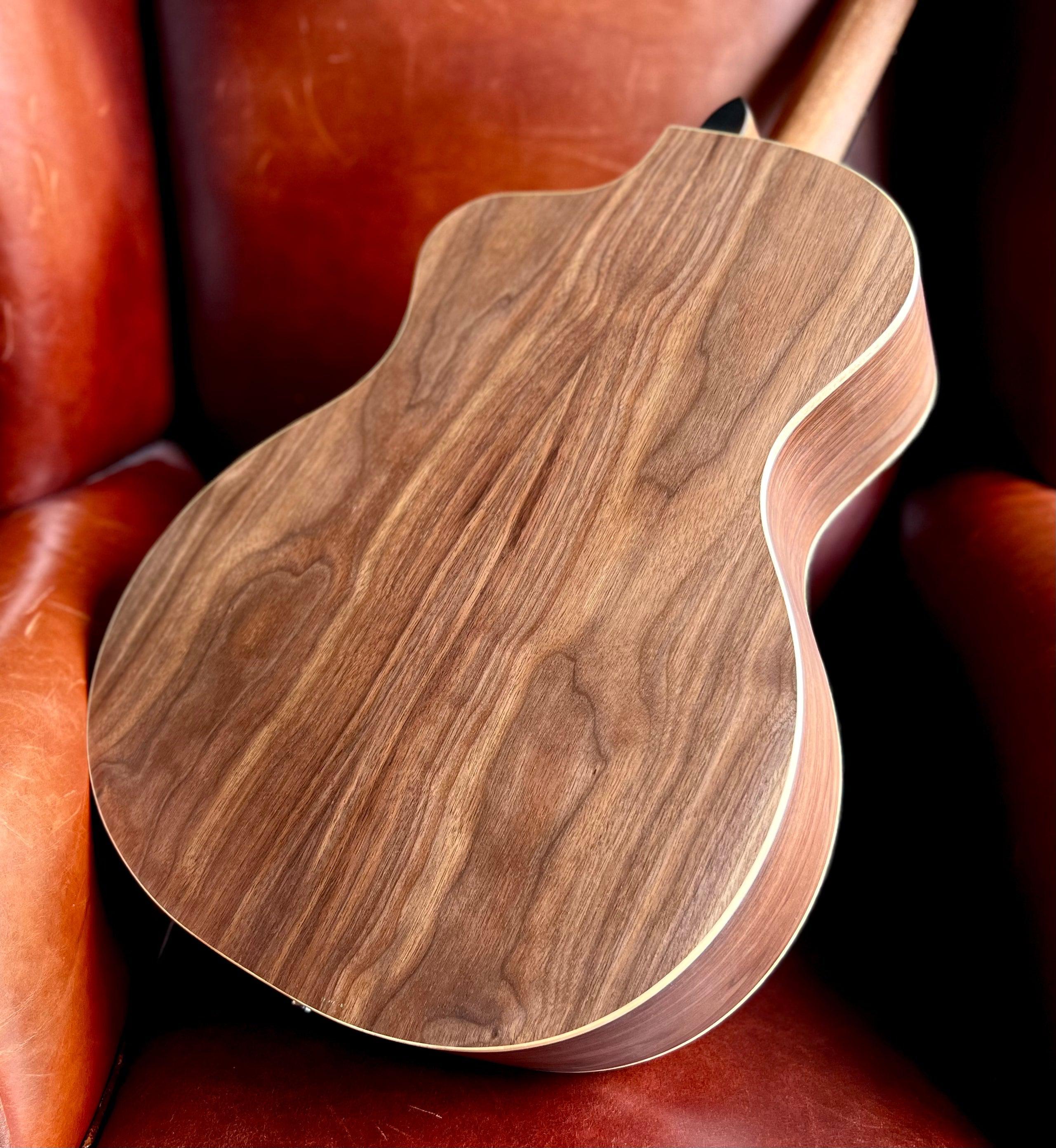
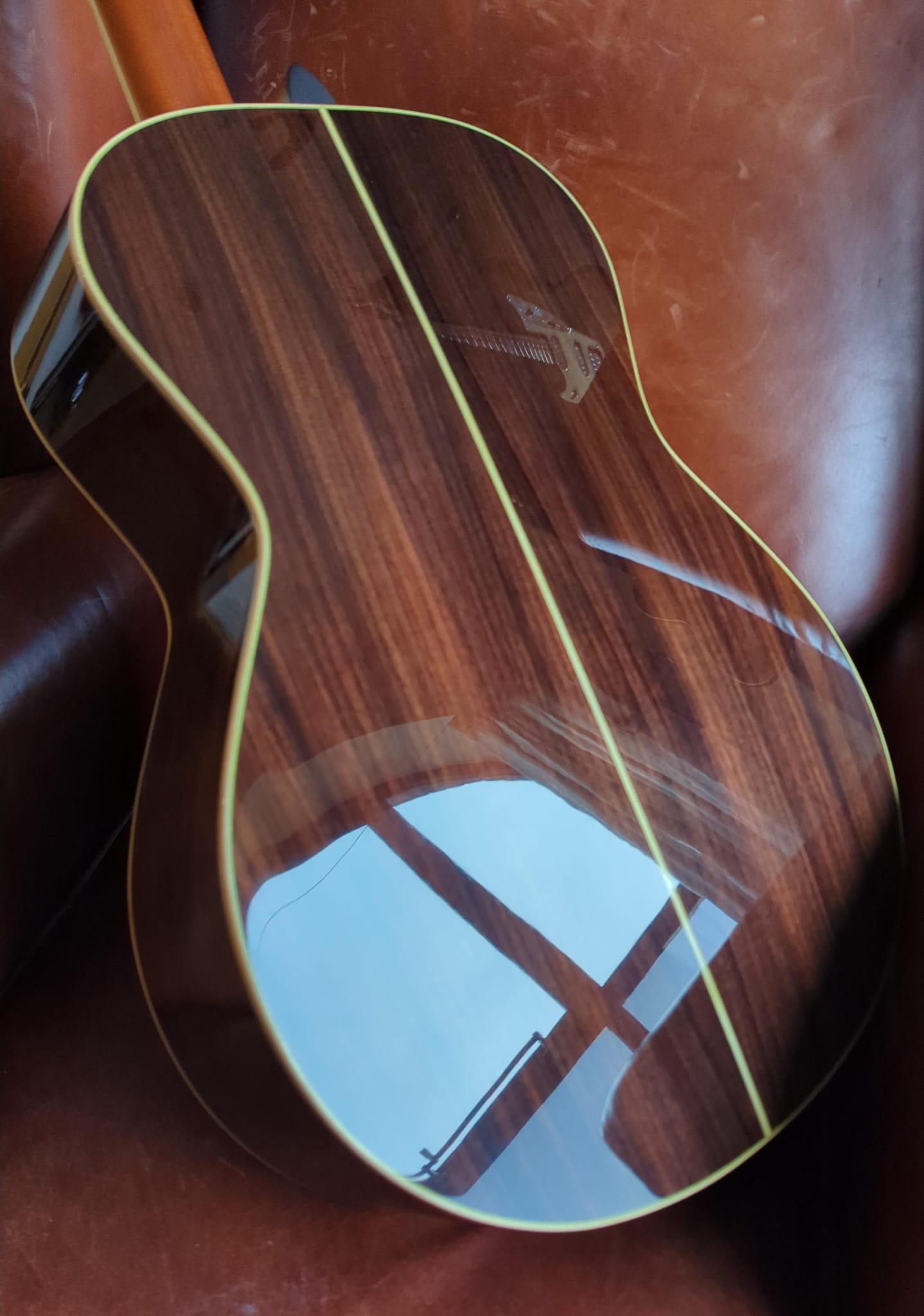
The Furch blooms and fills space. Cedar and Khaya radiate warmth and depth. Beautiful, but not the crisp, cutting attack required for trad rhythm. The Guild is the opposite: a reflective design. The arched maple back bounces sound forward. Maple’s natural reflectivity gives immediacy, clarity, and a tight low end. Two short scale guitars, two different tonal philosophies.
The Voice I Wanted
• Bright trebles without harshness
• Fast attack
• Controlled bass
• Clean mids
• Good tension on a short scale
This is the voice Éala (her code name) needed to have.
The Setup
Richard set it up for clarity and tension, avoiding the slinky feel some short scale guitars suffer from.
0.54 Sixth String
We upgraded the low E to a 0.54. On a short scale this makes a huge difference: more authority, better definition, no boom.
Nickel Bronze Strings
Nickel Bronze suit the Guild perfectly.
• PB adds warmth and shimmer — not what I needed
• NB emphasise clarity and the fundamental
• They keep the low end tight and ornaments crisp
They reinforce the Guild’s strengths instead of masking them.
Amplified Use
A guitar chosen for a job also has to behave when amplified.
Pickup
The onboard pickup is honest and clean. It doesn’t impose character; it simply passes on the guitar’s natural clarity. Because the body is reflective rather than resonant, the amplified signal stays tight and avoids the low mid woofiness cedar guitars can produce.
Signal Chain
Guild pickup → AFX Compressor → Palmer Pocket Acoustic (more AFX in FX loop) →PA. This chain suits the Guild extremely well.
AFX Compressor (before the Palmer):
• Evens the attack
• Keeps ornaments tidy
• Prevents spikiness under a hard pick.
Palmer Pocket Acoustic:
• Transparent, no artificial warmth
• Preserves NB clarity
• Handles the heavier 6th string cleanly
The result is an articulate, balanced, mix ready signal. Many small guitars fall apart when amplified; this one doesn’t. It partners with the rig instead of fighting it.
How It Meets the Spec
• Clean, immediate attack
• Bright but musical trebles
• Disciplined bass
• Sweet, clear mids
For trad rhythm, it’s ideal. Notes stay separate, ornaments speak cleanly, and it never tries to sound bigger than it is.
Feel & Ergonomics
Despite being slightly shorter than the Furch (23.75"), it holds tension beautifully. No rubbery feel. Light, compact, and comfortable for long sessions.
Where It’s Not the Right Tool
• Not the warm, blooming cedar voice of the Furch
• Not the fuller low end of the GS Mini
• Not a singer songwriter guitar
• Not a main recording instrument
It’s a specialist — and that’s the point.
Conclusion
I didn’t buy the Guild because it was small or convenient. I bought it because I needed a compact guitar with a clear, articulate, responsive voice for trad rhythm. Éala does that job beautifully. Richard’s setup sealed it, and the guitar fits the brief exactly. It’s not a GS Mini, and it’s not a Furch — and that’s precisely why it earns its place.





















![Gordon Smith GS2 Deluxe Export 2019 [used] A1 Condition - Richards Guitars Of Stratford Upon Avon](http://rguitars.co.uk/cdn/shop/files/gordon-smith-gs2-deluxe-export-2019-used-a1-condition-4323398.jpg?v=1766153718&width=1072)
![Gordon Smith GS2 Deluxe Export 2019 [used] A1 Condition - Richards Guitars Of Stratford Upon Avon](http://rguitars.co.uk/cdn/shop/files/gordon-smith-gs2-deluxe-export-2019-used-a1-condition-9502671.jpg?v=1766153718&width=899)
![G&L USA Made ASAT - late 80s/early 90s [Used] - Richards Guitars Of Stratford Upon Avon](http://rguitars.co.uk/cdn/shop/files/gl-usa-made-asat-late-80searly-90s-used-1091932.jpg?v=1761670676&width=1378)
![G&L USA Made ASAT - late 80s/early 90s [Used] - Richards Guitars Of Stratford Upon Avon](http://rguitars.co.uk/cdn/shop/files/gl-usa-made-asat-late-80searly-90s-used-7964817.jpg?v=1761670677&width=1828)
![Eastman AC630 - SB [Used] - Richards Guitars Of Stratford Upon Avon](http://rguitars.co.uk/cdn/shop/files/eastman-ac630-sb-used-5743157.jpg?v=1760421581&width=1080)
![Eastman AC630 - SB [Used] - Richards Guitars Of Stratford Upon Avon](http://rguitars.co.uk/cdn/shop/files/eastman-ac630-sb-used-2967411.jpg?v=1760421593&width=1569)
![Fender American Standard Telecaster 2012 - Natural [Used] guitar for sale uk](http://rguitars.co.uk/cdn/shop/files/fender-american-standard-telecaster-2012-natural-used-4379607.jpg?v=1760421498&width=1614)
![Fender American Standard Telecaster 2012 - Natural [Used] guitar for sale uk](http://rguitars.co.uk/cdn/shop/files/fender-american-standard-telecaster-2012-natural-used-1429240.jpg?v=1760421497&width=1512)
![Fender American Professional II Jazzmaster - Dark Night [Used] guitar for sale uk](http://rguitars.co.uk/cdn/shop/files/fender-american-professional-ii-jazzmaster-dark-night-used-6840250.jpg?v=1760421430&width=1602)
![Fender American Professional II Jazzmaster - Dark Night [Used] guitar for sale uk](http://rguitars.co.uk/cdn/shop/files/fender-american-professional-ii-jazzmaster-dark-night-used-4375294.jpg?v=1760421432&width=1476)
![Guild Brian May "Red Special" Limited Edition - early 90s - One of 1000 [Used] guitar for sale uk](http://rguitars.co.uk/cdn/shop/files/guild-brian-may-red-special-limited-edition-early-90s-one-of-1000-used-6139630.jpg?v=1760421357&width=1492)
![Guild Brian May "Red Special" Limited Edition - early 90s - One of 1000 [Used] guitar for sale uk](http://rguitars.co.uk/cdn/shop/files/guild-brian-may-red-special-limited-edition-early-90s-one-of-1000-used-9797150.jpg?v=1760421365&width=1644)